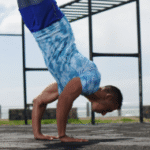
How Long Does it Take to Learn a Handstand? A Detailed Timeline
In the vibrant fitness scene of Houston, where skill-based training like calisthenics is booming, the freestanding handstand stands out as a benchmark of strength and control. If you’re considering this journey, your first question is likely: “How long will it actually take?”
The honest answer is: it depends. There is no magic number. Learning a handstand is a marathon, not a sprint, and the timeline is deeply personal. However, for a dedicated beginner starting from scratch, we can map out a realistic path with clear milestones. This guide will break down that timeline and explain the critical factors that will define your personal journey.
The Timeline: A Phase-by-Phase Breakdown
This timeline assumes you are a beginner with no prior gymnastics experience, practicing consistently 3-5 times per week with a focus on quality.
Phase 1: The Foundation (First 1-3 Months)
This initial phase is not about balancing; it’s about building the physical and mental groundwork. The goal here is to get strong and comfortable being upside down.
What to Expect: Most of your time will be spent on conditioning drills and working with the wall. You will feel your shoulders and wrists getting stronger. The biggest win in this phase is overcoming the initial fear.
Key Milestones:
Holding a 60-second chest-to-wall handstand with good form (a straight body line).
Mastering the safe bail-out (cartwheeling out), which is crucial for building confidence.
Developing the wrist and shoulder strength to practice without pain or excessive fatigue.
Phase 2: The First Glimmers of Balance (Months 3-6)
With a solid foundation, you can now begin the true quest for balance. This phase is often a rollercoaster of success and failure, which is a normal and necessary part of the process.
What to Expect: You will start practicing drills that challenge your balance, like shifting your weight away from the wall. You will experience your first, fleeting moments of a freestanding hold. They will feel like magic.
Key Milestones:
Achieving your first-ever 2-3 second freestanding handstand hold .
Being able to “pull” your feet off the wall and hold the balance for a moment before returning.
Developing the ability to use your fingers and hands for micro-adjustments.
Phase 3: Building Consistency (Months 6-12+)
You’ve tasted balance; now the goal is to make it reliable. This phase is all about accumulating time on your hands and refining your technique.
What to Expect: Your holds will start to get longer. You’ll have good days where you feel solid, and bad days where you can’t seem to find your balance at all. This is where mental resilience is built.
Key Milestones:
Achieving a consistent 5-10 second freestanding handstand . “Consistent” means you can achieve it multiple times in a single session.
Developing a more reliable kick-up, where you can enter the handstand without relying on the wall.
Phase 4: Mastery and Exploration (1-3+ Years)
Once you have a consistent 10-15 second hold, you have officially “learned” the handstand. The journey from here is about mastery.
What to Expect: This is where the real fun begins. You can start working on longer holds, different leg shapes (tuck, straddle), and even progressions towards more advanced skills like the handstand press.
Key Milestones:
Holding a solid 30-60 second freestanding handstand .
Developing the control to move into different shapes while balancing.
The X-Factors: What Determines Your Personal Timeline?
Why do some people learn in 6 months while others take 2 years? It comes down to these key factors:
- Consistency of Practice (The 1 Factor): This is the great equalizer. Practicing for 15-20 minutes every day is infinitely more effective than a single 2-hour session once a week. Your brain and nervous system learn through frequent repetition.
- Quality of Practice: Mindlessly kicking up against a wall is not effective practice. A structured session that includes a proper warm-up, specific conditioning drills, and focused balance work is crucial. This is where a coach or a quality program makes the biggest difference.
- Your Starting Point: An athlete with a background in gymnastics, yoga, or weightlifting will likely have a head start in strength and body awareness. A complete beginner will need to spend more time in the foundational phase.
- The Fear Factor: Your ability to overcome the fear of falling is a huge variable. A person who quickly learns to trust their “bail-out” will progress much faster because they are not afraid to experiment and find their balance point.
- Physical Attributes: While less important than consistency, factors like shoulder mobility and natural body awareness can play a role. A good program will include drills to improve these areas.
Conclusion:
Learning a handstand is a journey of patience, discipline, and consistent effort. While a general timeline can provide a roadmap, your personal progress will be unique. Don’t get discouraged by comparing your journey to others. Whether you’re training in a Houston park or a specialized studio, the key is to fall in love with the process. Celebrate the small victories—the longer wall hold, the first fleeting moment of balance—and trust that with consistent, intelligent practice, the skill of the handstand is an achievable and incredibly rewarding goal.

How Long Does it Take to Learn a Handstand? A Detailed Timeline
Route
Calisthenics Gym Houston Functional Bodyweight Training
Secondary phone: (346) 483-3195
Email: info@calisthenicsclubhouston.com
URL: https://calisthenicsclubhouston.com/
Monday 6:00 AM - 7:00 PM Tuesday 6:00 AM - 7:00 PM Open now Wednesday 6:00 AM - 7:00 PM Thursday 6:00 AM - 7:00 PM Friday 12:00 PM - 6:30 PM Saturday 9:45 AM - 12:00 PM Sunday 3:00 PM - 5:00 PM